
One Child's Play, Another's Trauma: Our Session at the Network Teach Early Childhood Conference 2026
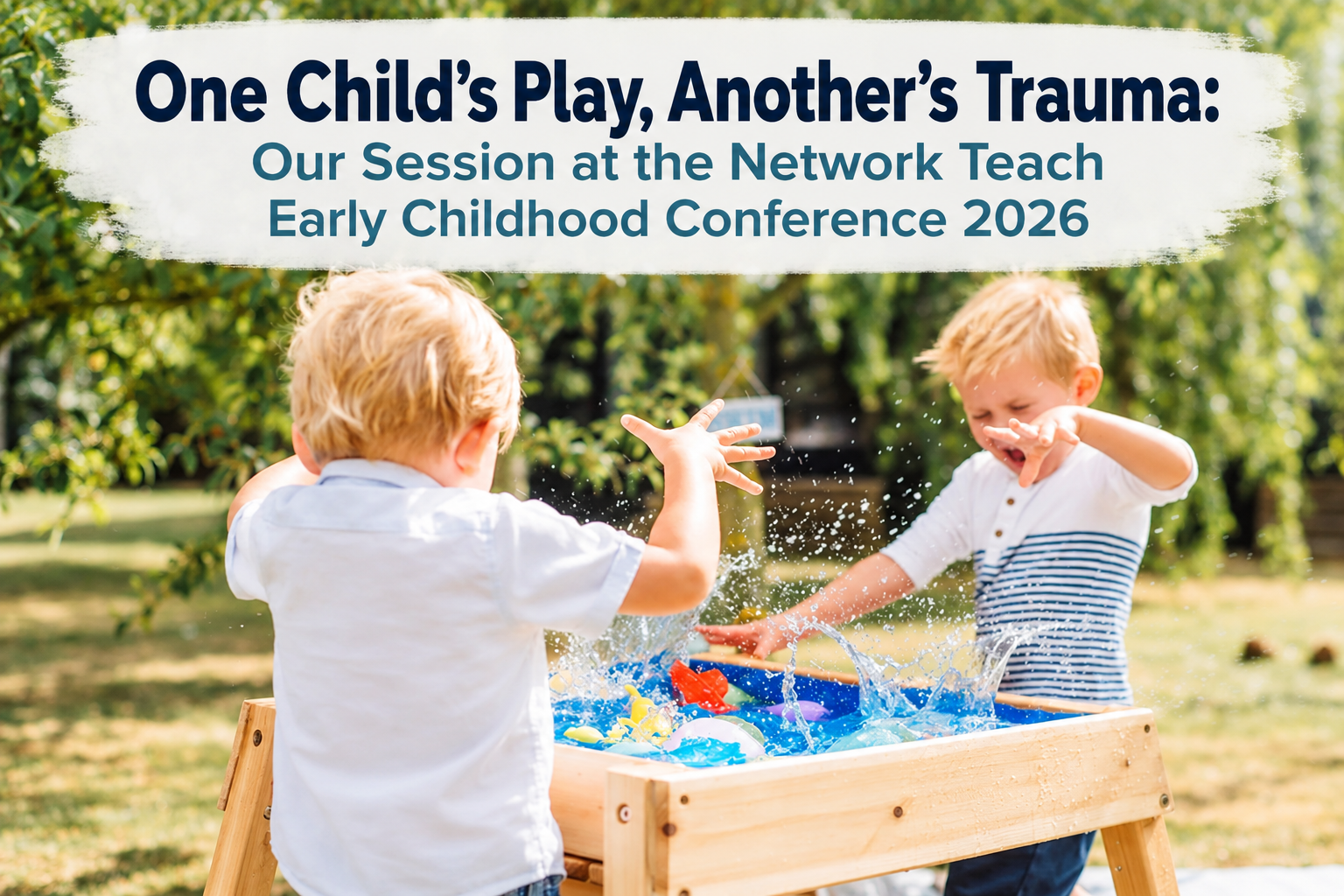
Today our co-director Seb Della Maddalena (Haven OT and Play Matters Collective) presented with Dr Ruyi Tong (RT Speech and Hearing) at the Early Childhood Conference 2026, Future Ready Begins with Play, hosted by Network Teach at Murdoch University.
We opened with a familiar scene. The water table is out. For one child it's the best five minutes of the day, and for another it's the moment everything falls apart. It's the same activity in the same room. Why?
Play depends on feeling safe
Play only happens when a child's nervous system feels safe. When the body senses a threat, it shifts automatically into fight, flight or shutdown, and play becomes much harder. A child who runs from an activity, or goes quiet and still, isn't being defiant. Their nervous system is protecting them. Behaviour is communication.
Practical strategies
Understand each child's sensory profile, and adapt the materials rather than the child.
Build calm spaces and predictable routines into the room.
Use visuals, and offer real choices instead of demands.
Allow processing time, and use comments rather than commands.
Three takeaways
Behaviour is nervous-system information, not defiance.
Inclusion means building in more than one way in from the start.
When educators, families and therapists work together, "problem behaviour" can become participation.
Thank you to Network Teach, Murdoch University and every educator who joined us. If you'd like to talk about supporting a child in your setting, please get in touch.
Seb Della Maddalena – Haven OT & Play Matters Collective – seb@havendisabilityservices.com
Dr Ruyi Tong – RT Speech and Hearing – ruyi@rtspeechandhearing.com